If you’ve ever dealt with a persistent, itchy rash that just won’t quit, you may have wondered whether eczema is the culprit. It’s one of the most common skin conditions, yet it’s also one of the most misunderstood.
One in ten people will develop atopic dermatitis—the most common form of eczema—at some point in their lifetime, and yet many patients don’t recognize it when it shows up. Olivia Heysek, PA-C, breaks down what eczema actually is, how it presents, and what you can do about it.
What Is Eczema?
Eczema is not a single condition. It’s a group of conditions that cause the skin to become dry, irritated, and itchy. The most common type is atopic dermatitis, and that’s the one most people are referring to when they use the term.
Types of Eczema
While atopic dermatitis is the most well-known, the American Academy of Dermatology (AAD) recognizes seven types of eczema. Heysek covered the most common ones in practice, and the full picture from the AAD fills in the rest.
- Atopic dermatitis is the most common and tends to feel somewhat random to patients. There’s no clear trigger they can point to. It just flares, sometimes seasonally, sometimes for no obvious reason.
- Contact dermatitis is triggered by direct contact with something on the skin, whether an allergen or an irritant. The cause is usually identifiable with some investigation.
- Seborrheic dermatitis is the type most associated with the scalp and face, often appearing as flaky, oily patches in those areas.
- Stasis dermatitis typically affects the lower legs and is related to poor circulation and fluid buildup in the tissue.
- Dyshidrotic eczema appears as tiny blisters on the hands and feet and is more common in warmer months or with increased stress and allergen exposure.
- Nummular eczema presents as coin-shaped spots on the skin and can look quite different from other types, sometimes leading to confusion in diagnosis.
- Neurodermatitis involves intensely itchy patches that develop when something triggers the urge to scratch, which in turn makes the itch worse, creating a cycle that can be difficult to break.
Diagnosis is usually made through a thorough history and physical exam.
“If there’s nothing in the patient’s history that’s pointing to one of the other types, atopic is usually the one where patients have no idea why they’re getting it,” Heysek explains. “It just feels random.”
If there’s ever uncertainty, a skin biopsy can help clarify the diagnosis, and Apex Skin’s in-house lab provides fast turnaround on those results.
What Does Eczema Look and Feel Like?
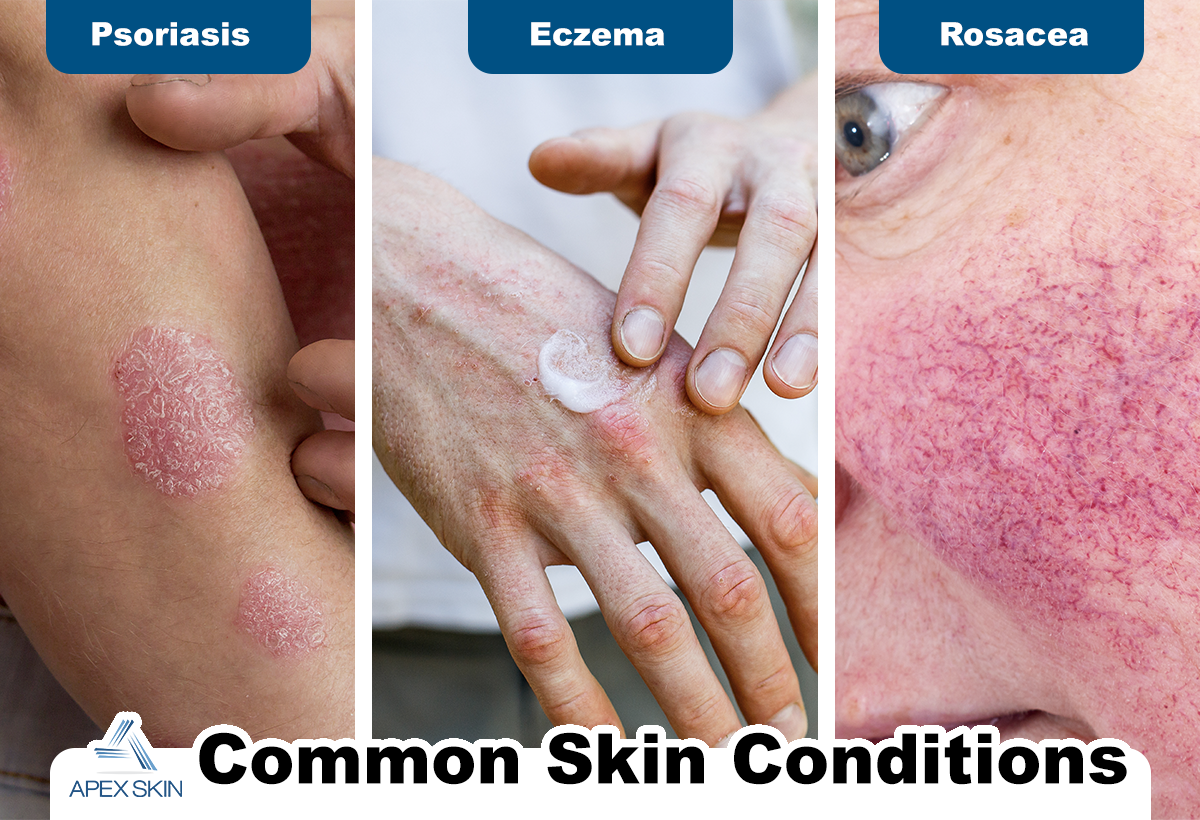
Eczema can look like a lot of different things, which adds to the confusion.
- It can appear red, scaly, or flaky, and in some cases the skin becomes thickened from repeated scratching.
- Secondary infections are also possible when the skin barrier has been significantly compromised.
- On deeper skin tones, redness isn’t always the most prominent feature, so the presentation can vary significantly from patient to patient.
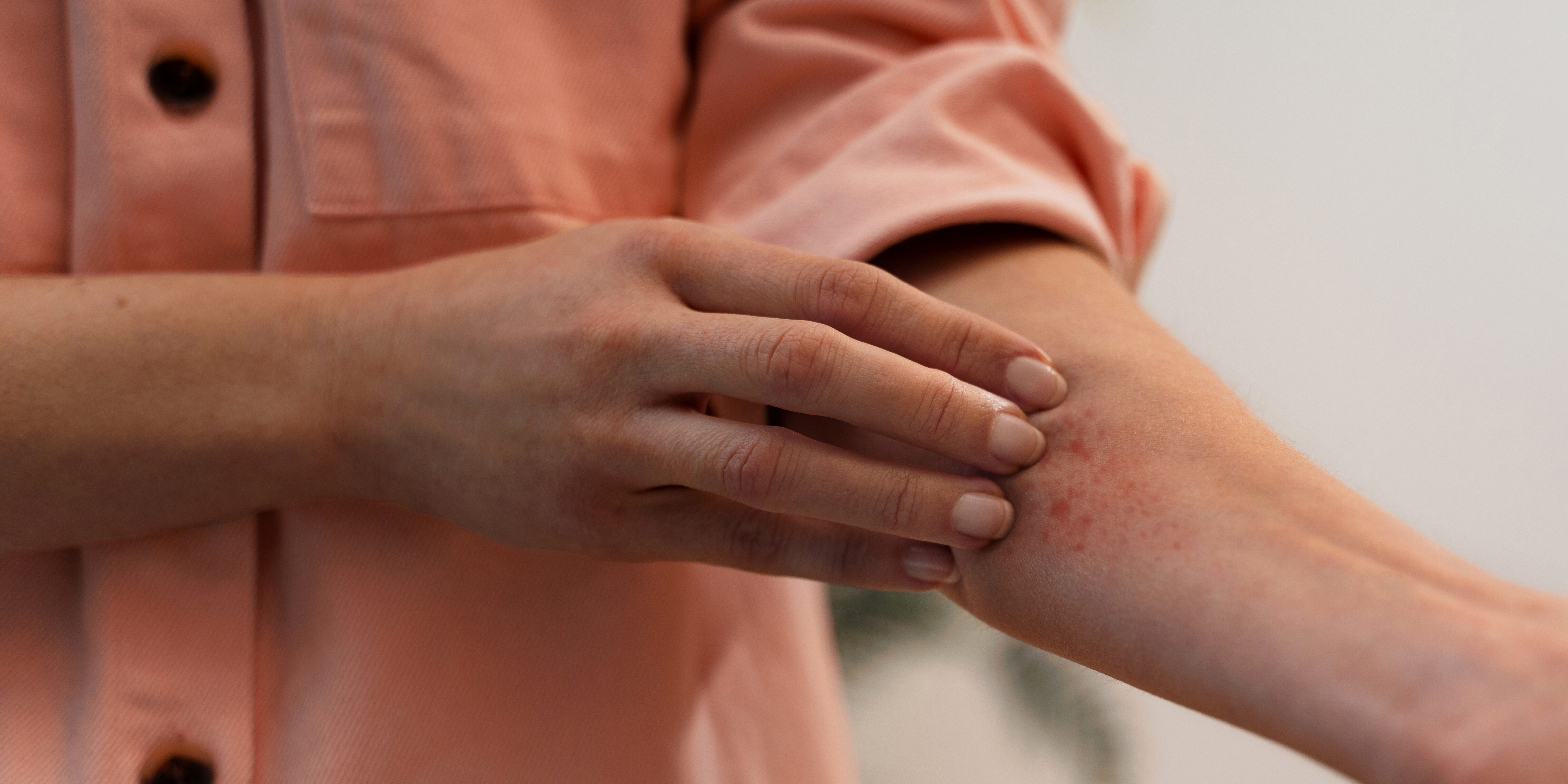
The hallmark symptom, though, is itch. “We actually call eczema ‘the itch that rashes,'” Heysek says, “because often it’s the itch that brings people in and maybe just some very subtle changes to the skin.” A rash can range from concentrated patches to widespread involvement across the body.
- In children, eczema tends to show up in classic locations like behind the knees and in the creases of the elbows.
- In adults, it can appear virtually anywhere, including the hands, feet, scalp, and face, depending on the type.
How to Tell an Eczema Flare from Dry Skin
Not every patch of dry or irritated skin is eczema, so how do you know when to take it more seriously? Heysek offers a straightforward benchmark: “A flare of eczema is not going to be helped by your regular moisturizer. So if you’re moisturizing the skin and it’s still flaring up, it’s probably time to move to your prescriptions.”
What Causes Eczema?
The honest answer is that there’s no single known cause. Atopic dermatitis involves a combination of genetic and environmental factors, and researchers haven’t yet identified one definitive trigger or cure.
“There’s not so far one thing we can point to as the cause or the cure,” Heysek says. “So we have a lot of different options for treatments, but no definitive cure yet for eczema.”
Common Triggers
Even without a known cause, certain triggers consistently make eczema worse. The most common ones Heysek sees include:
- Extreme temperatures—both the heat of summer, which causes sweat-related flares, and the cold, dry air of winter.
- Environmental irritants like fragrances, pollution, pollen, and allergens are also frequent culprits.
“Everybody has different triggers,” she notes, which is part of what makes eczema management so individualized.
Treatment Options
“It’s a good time in history to have eczema because we do have a lot of treatment options now,” Heysek says.
Treatment options have expanded significantly, and there’s more flexibility than ever in how to approach the right treatment routine. Heysek typically starts with the least intensive option that fits the patient’s situation.
- For mild cases, over-the-counter moisturizers combined with some lifestyle adjustments can make a meaningful difference.
- For patients who have already tried that route without success, prescription topical treatments are the next step, including both steroid and non-steroid options.
- For more chronic or severe cases, there are now systemic treatments in pill and injectable form that address the underlying inflammation driving the condition.
Lifestyle Tips That Make a Difference
Alongside any prescription treatment, Heysek consistently recommends a few foundational lifestyle habits.
Moisturize daily, and do it within three minutes of showering to lock in hydration before the skin dries out. Choose heavier formulas over lightweight lotions. “Creams are going to be thicker and a little bit more effective,” she says. “So moisturizing every day, avoiding irritants, avoiding fragrance is always usually a good idea for sensitive skin and even in your laundry soap.”
When it comes to products, simpler is almost always better. “A lot of people have very long lists of their skincare and products they’re using, and sometimes simple is better for sensitive skin,” she notes. Stick with plain, fragrance-free drugstore brands rather than reaching for specialty creams or trendy online products that may contain unknown irritants.
When to See a Dermatologist
If over-the-counter options and lifestyle changes haven’t resolved the rash or the itch, it’s time to see a dermatologist. Heysek recommends booking a rash appointment specifically, since those are scheduled with extra time built in to go through your full history and, if needed, perform a biopsy.
“If patients are trying those simple over-the-counter lifestyle measures and they’re not seeing improvement—they still have a rash or itching of their skin consistently—it’s definitely time to come in,” she says.

Setting Realistic Expectations
A few persistent myths come up in Heysek’s practice regularly:
- The first is that eczema only affects children, when in reality, it can develop at any age, and adult-onset atopic dermatitis is more common than most people realize.
- The second is that eczema is simply severe dry skin. It isn’t. The skin barrier dysfunction and immune involvement in atopic dermatitis go well beyond simple dryness.
- And the third is perhaps the most important one for managing expectations: “People get confused that if they use a treatment, their eczema will go away. But unfortunately, it is usually chronic for those moderate to severe patients.”
That doesn’t mean it can’t be managed well. With the right treatment plan and consistent habits, most patients can significantly reduce the frequency and severity of flares and get back to living comfortably in their skin.
If you’ve been dealing with a rash that isn’t responding to over-the-counter care, or you’re not sure what you’re dealing with, the team at Apex Skin can help. The sooner you get an accurate diagnosis, the sooner you can stop guessing and start managing it the right way.

Olivia Heysek is a board-certified Physician Assistant licensed in Ohio. A native of Bainbridge, Ohio, she graduated from Kenston High School before earning both her Bachelor of Science and Master of Physician Assistant Science degrees from Gannon University in Erie, Pennsylvania.