

What Patients Get Wrong About Tick Bites
Tick season in Ohio runs longer than most people realize, and the misconceptions around tick bites can cause more harm than the bites themselves. Katie Novotny, MSN, RN, CNP, of Apex Skin breaks down what you actually need to know about tick bites, from removal to when to seek care.
-
Tick Bites Don’t Always Cause Lyme Disease
The biggest misconception Novotny wants to clear up: not every tick bite results in Lyme disease. “People think that you’re always going to get sick from a tick bite,” Novotny says. While it’s still important to monitor for symptoms, in reality, finding a tick doesn’t automatically mean you’ll develop Lyme disease. -
Ticks Don’t Jump
The other thing that surprises a lot of patients is that ticks don’t jump. They crawl. And because tick saliva contains a numbing agent, you won’t feel the bite at all. Most of the time, people discover a tick by seeing it on their skin, either crawling or already embedded. -
Your Tick Doesn’t Need Tested—You Do
Following guidelines from the CDC and Ohio Department of Health, Apex Skin does not run tests on ticks. “You don’t need to bring the tick in with you for testing. We are not going to test it for disease,” Novotny says. Instead, what matters is how long the tick was attached and whether symptoms develop after the bite. If concerns arise, Apex can evaluate the bite site, check for any remaining mouth parts, and order blood work when appropriate to evaluate for Lyme disease.
What a Tick Bite Looks Like + How to Check for Ticks
The most common presentation Novotny sees is an engorged tick still embedded in the skin. Many patients don’t even realize it’s there and discover it during a skin check, thinking it’s a new growth.
“Most people don’t even know it’s there,” Novotny says. “We’re doing a skin check and they mention a new growth and when I go look and I realize, ‘Oh, it has legs.'”
The area around the bite is often slightly swollen, almost like a hive. Because tick saliva contains a numbing agent, many people never feel the bite happen in the first place, making ticks surprisingly easy to miss.
Ticks tend to make their way into easy-to-miss spots. Common areas include the legs, arms, behind the ears, in the hair, around the belly button, and along the waistline. When checking kids, go head to toe and everywhere in between.
How to Remove a Tick at Home
If you find an embedded tick at home, use tweezers. Grab the tick as close to the skin as possible, near the head, and pull firmly upward. If you don’t get every part of it out, your body will eventually reject it as a foreign body, but you can also come in to have the area evaluated and any remaining mouth parts removed.
What not to do: don’t try to burn the tick, smother it with Vaseline, or douse it with alcohol before removing it.
“All of that just irritates the tick,” Novotny says, which can cause it to release more saliva and potentially worsen your reaction.
After removal, clean the area with soap and water. That’s when alcohol or hand sanitizer is appropriate, to clean the bite site itself.
What to Watch for After a Bite
Time matters when it comes to tick bites. If a tick has been attached for less than 36 hours, the risk of Lyme disease transmission is significantly lower.
When a patient comes in with an embedded tick and it’s been more than 36 hours since possible exposure, Novotny will remove the tick and may prophylactically treat with doxycycline, the antibiotic of choice for Lyme disease prevention and treatment.
Once the tick is removed, keep a close eye on both the bite site and your overall health for the following 3 to 30 days. Watch for:
- Bullseye rash
- Fever
- Headache
- Joint pain
- Swollen lymph nodes
- Flu-like symptoms
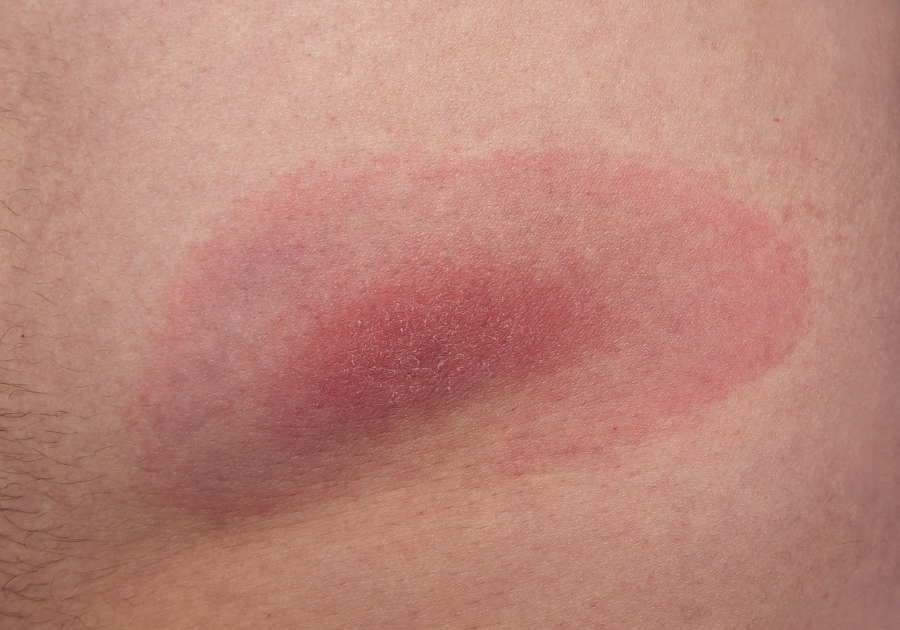
If you develop any of these symptoms after a tick bite, contact your healthcare provider. If you’ve recently had a tick bite, Apex Skin can evaluate the area, check for retained mouth parts, and order testing when appropriate.
When Is Tick Season in Ohio?
In northeast Ohio, tick season spans spring, summer, and fall. The biggest spike tends to happen in spring when people are out doing yard cleanup, and the CDC has shown a notable uptick in cases in April specifically. In mild winters, ticks can remain active year-round, so awareness shouldn’t drop off entirely once temperatures dip.
Identifying Common Ticks in Ohio
Understanding which species are prevalent in our state is key to being aware. While the Ohio Department of Health recognizes about twelve different types locally, three specific species account for nearly every reported tickborne illness. These are the ones you and your pets are most likely to encounter while outdoors.
- The blacklegged tick, frequently called the deer tick, is the primary concern for Lyme disease transmission in Ohio. It also carries babesiosis, anaplasmosis, and Powassan virus. Though found statewide, they congregate in brushy or wooded sections of southern and eastern counties. Their activity peaks in May, June, October, and November, but they can remain active whenever temperatures are above freezing.
- The American dog tick is a common sight across all of Ohio, particularly in open meadows and grassy fields. While it does not transmit Lyme, it is a vector for Rocky Mountain spotted fever and, occasionally, tularemia. Adult females are the most frequent biters, with activity typically spanning from April through September.
- The lone star tick is an aggressive species that frequently targets humans, especially in the southern half of the state. It is known for transmitting ehrlichiosis and STARI (southern tick-associated rash illness). Notably, its bite is linked to alpha-gal syndrome, which can result in a red meat allergy. Like the dog tick, its peak season runs from April through September.
What Is Lyme Disease?
Lyme disease is a bacterial infection triggered by Borrelia burgdorferi, which enters the body through the bite of an infected blacklegged tick. According to the CDC, it remains the most prevalent tick-borne illness in the country, with Ohio situated in one of the highest-risk regions alongside the Northeast and upper Midwest.
This infection moves through distinct phases. Early symptoms often emerge 3 to 30 days post-bite, involving:
- Fever
- Fatigue
- Headaches
- Joint aches
- Signature bullseye rash (While its presence is a clear signal for medical intervention, the bullseye rash only appears in about 30% of confirmed Lyme cases.)
If missed, it can progress to the disseminated stage when the bacteria spreads from the initial tick bite and impacts various body systems.
Late-stage complications may include:
- Cardiac issues
- Neurological problems
- Chronic arthritis.
When identified early, most patients recover fully with a standard course of doxycycline.
Tick Prevention Tips That Actually Work
A few practical steps Novotny recommends:
- In your yard: Keep grass cut low and clear out leaf piles, which are prime tick-breeding environments.
- While camping or hiking: Use permethrin spray on clothing and gear. It can last through up to five washes, making it a practical option for people who spend a lot of time outdoors. It can also be applied to pet leashes.
- After being outside: Put clothing directly in the dryer before washing. Heat kills ticks more reliably than water alone. Then do a full-body check and check your pets as well.
When to See a Dermatologist for Ticks Bites
If you’ve found and removed a tick, Apex Skin is happy to evaluate the bite site, check for any remaining mouth parts, and order blood tests if symptoms warrant it. While we can’t determine what type of tick bit you or whether that specific tick was carrying Lyme disease,we can evaluate and treat any rash, skin reaction, or symptoms that develop after a bite.
As Novotny advises, “Be aware. Check yourself, check your pets, and check your clothing.”
If you have a tick bite or are concerned about symptoms following a bite, Apex Skin is happy to evaluate it. Same-day and same-week appointments are available.

Katie Novotny is a Cleveland native who has specialized in the field of dermatology since 1996. She started her career as a Medical Assistant before becoming a Registered Nurse and is now working for Apex Skin as a Certified Nurse Practitioner.