

For anyone who has spent years cycling through acne treatments that never quite get the job done, Accutane can feel like a big, intimidating step. There are the side effects, the monitoring requirements, and the commitment. But for the right patient, it can also be the thing that finally works.
Delaney Lancry, 23, shares her firsthand experience going through Accutane treatment at Apex Skin, alongside perspective from her provider, Olivia Heysek, PA-C, who has not only prescribed it to many patients but has been through a course of it herself.
Before Treatment: Years of Trying Everything
Delaney has struggled with acne since she was 13. Her acne wasn’t severe or cystic, but she dealt with persistent, stubborn whiteheads across her nose and T-zone that never fully went away, no matter what she tried.
“I tried spironolactone, doxycycline, tretinoin, all those options,” Delaney says. Doxycycline made her sick. Tretinoin helped somewhat but never fully cleared her skin. Spironolactone was similar. It improved things, but never got rid of those stubborn whiteheads. “They just never went away.”
Delaney had been a patient at Apex before, but between moving between providers and spending four years in Arizona for school, committing to Accutane didn’t feel realistic. Once she settled back in Ohio full time, she made an appointment with Heysek and finally felt ready to start.
“Some doctors say, ‘Let’s try one more thing, let’s try one more thing,'” Delaney says. “And she understood me and was confidently said, ‘Okay, we’re going on Accutane.'”
Who Is a Good Candidate for Accutane?
Heysek says Accutane doesn’t have to be reserved only for patients with severe, cystic acne. While that may have been how the medication was viewed in the past, it can also be an option for patients with mild or moderate acne that hasn’t responded well to other treatments.
“If a patient has tried anything for acne and they didn’t like it, it didn’t clear immediately, or they’re in the moderate to severe category, I think Accutane is a great choice,” Heysek says. “We have a lot of good tools that manage acne and that clear the skin maybe temporarily or help but don’t clear all the way. Accutane is the only thing that works as more of a cure. It’s not a cure, but it’s the closest thing that we have.”
Delaney’s experience is a good example. She didn’t have severe cystic acne, but she had spent years dealing with oily skin, clogged pores, whiteheads, and breakouts that never fully responded to other treatments.
Heysek also sees a benefit in considering treatment earlier, particularly when there is a risk of acne scarring.
“Acne scarring is really hard to treat. It can be very expensive, so I think that’s a huge reason to start treatment earlier so you don’t have to worry about that down the road,” she says.
Body acne is another area where Heysek often considers Accutane. Applying topical treatments across the chest, shoulders, or back can be difficult, and for some patients, a course of Accutane may be a more practical option.
What to Know Before You Start
Accutane is regulated through a program called iPLEDGE because patients cannot become pregnant while taking the medication. For patients who can become pregnant, that means completing monthly pregnancy tests and following the program’s pregnancy prevention requirements throughout treatment.
While there are a few extra steps involved, Delaney says they quickly became part of her routine.
“You have to get your blood work done the first couple months. But it just becomes a routine,” she says. “I’m here every month, and it’s not that big of a deal. It’s a 10-minute appointment.”
Blood work is also part of the process. Heysek checks certain markers, including triglycerides, before treatment. She explains that monthly blood work is no longer required for every patient and that ongoing testing is determined by the provider.
Despite Accutane’s reputation online, Heysek says she feels comfortable prescribing it to appropriate patients.
“Accutane does get a really bad rep for a few of the side effects, especially the dryness everybody gets,” she says. “But the more serious side effects that we think about are just not as much of a concern with the average patient.”
“It’s really safe and effective, so I’m really comfortable using it,” Heysek adds.
The First Few Months
Delaney started treatment in June of 2026 and is now four months in, with two months to go. The first month, she found herself checking her skin constantly, looking for signs of change. They were subtle at first.
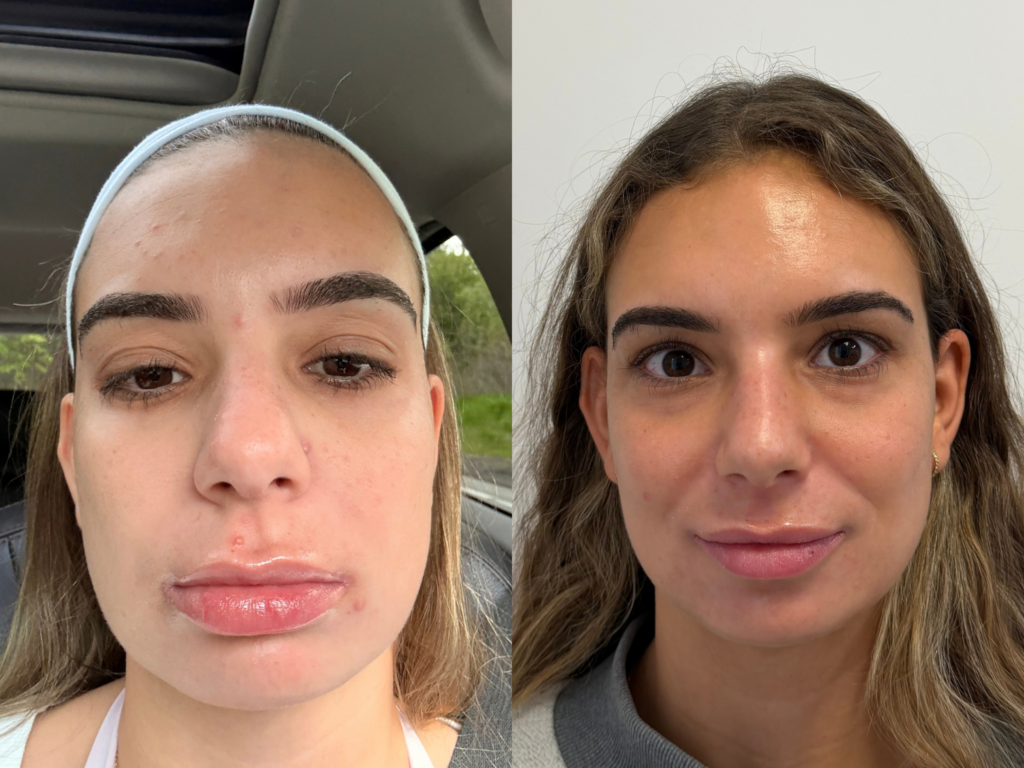
“I remember the first month I was just like, ‘Oh my gosh, did a pimple go away?’ You just have to trust the process,” she says. “My skin was definitely less dry the first month. Little by little, you just keep getting more dry. But you get used to it and find the right solutions to keep it hydrated.”
The dryness picked up as fall weather arrived, which Heysek notes is pretty typical. Warmer months tend to be easier on the skin during treatment.
The real turning point came around months three and four. One particularly stubborn whitehead on Delaney’s nose that had been there for years simply disappeared.
“My nose just looks completely different. All of those stubborn bumps are just gone, and that just changed my confidence so much,” she says. “That was when I really started seeing change.”
She still got a pimple last week, but unlike stubborn acne from before, this one lasted two days and was gone.
Side Effects and How to Manage Them
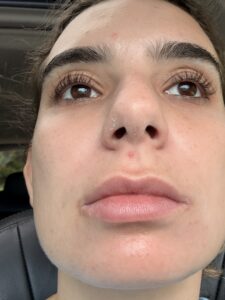
Dryness is one of the most common side effects on Accutane, and it can affect more than just the face.
“You just have to always have ChapStick on you. If I’m out of the house and I don’t have it, I will go home and grab it,” Delaney says. Dry nose has been another consistent complaint for her, especially as the weather gets colder.
Heysek’s recommendations for managing side effects during treatment are simple: Vaseline or Aquaphor for the lips, saline products for dryness in the nose, and gentle, hydrating skincare. Delaney uses Ayr Saline Nasal Gel No-Drip to help with nasal dryness.
“On Accutane you want to use really gentle and moisturizing products,” Heysek says. “Sun sensitivity can be heightened with Accutane because your skin is cycling more frequently. But I would say some of the other common treatments for acne, like doxycycline, are sometimes even worse. Wear your sunscreen and do your best and it should be okay.”
Other side effects to be aware of include occasional muscle or joint soreness, especially in athletes. For those with already dry skin, retinoid-induced dermatitis can sometimes develop. But Heysek says by and large, dryness is what most patients deal with, and it’s manageable.

Results and Life After Accutane
The standard course of Accutane runs about six months, with dosing based on the patient’s weight. Treatment typically continues until a goal cumulative dose is reached and the patient has been clear of new breakouts for two months.
For Delaney, the results have gone beyond just clearer skin.
“I feel so much better. I love my skin now,” she says. “I’m just so excited to see what it looks like when it’s fully moisturized without the dry skin. I can’t wait to put makeup on without it being dry.”
She’s also spending far less mental energy on her skin than she used to.
“I was testing out so many different skincare products, spending all this money on different skin treatments and serums, and it kept making me break out. Nothing was helping. I just needed to get advanced treatment.”
Heysek notes that about 90% of patients who complete Accutane never have their acne return. For the remaining 10%, acne may come back but is typically less severe, and a repeat course is an option for those who need it. After treatment, she typically sends patients home with a topical retinoid, like tretinoin, to handle any occasional breakouts, then checks in at one month post-treatment, six months, and yearly after that.
Heysek also speaks from personal experience. She did a shorter two-month course herself for mild but persistent acne that required a high-maintenance nightly routine to keep under control.
“I don’t have to use anything for my skin anymore,” she says. “In the long run, it makes your routine easier.”
Is It Worth It?
For Delaney, the answer is clear.
“For anyone considering accutane, I would tell them to do it,” she says. “It’s six-ish months of a little bit of a struggle for a lifetime of no acne, or almost no acne.”
She knows the side effects can make people hesitant, but after seeing her own results, she feels the treatment has been worth it.
“I wouldn’t take it back for the world,” she says. “I honestly wish I started it sooner.”
If you’re interested in exploring Accutane, Apex Skin recommends booking a new or established patient acne appointment and noting your interest in Accutane so your provider can discuss it as part of your care plan.

Olivia Heysek is a board-certified Physician Assistant licensed in Ohio. A native of Bainbridge, Ohio, she graduated from Kenston High School before earning both her Bachelor of Science and Master of Physician Assistant Science degrees from Gannon University in Erie, Pennsylvania.