
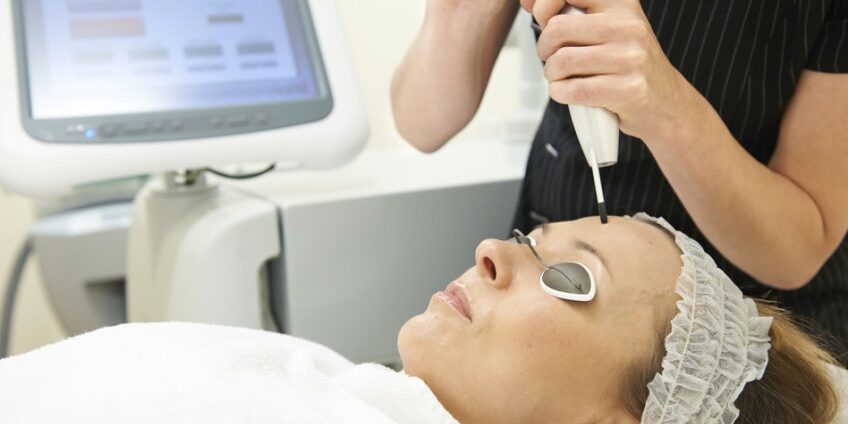

Laser skin rejuvenation has come a long way from its early days. Today’s facial laser treatments offer powerful results with minimal downtime, addressing everything from sun damage to acne scars. But with so many laser options available, how do you know which one is right for you?
Eva Mahoney, PA-C, at Apex Skin in Mayfield Heights, helps patients navigate their laser treatment options every day. In this comprehensive guide, she breaks down the most common misconceptions, answers your questions, and details four powerful laser systems that can transform your skin.
Breaking Down the Myths: What You Need to Know About Laser Treatments
Misconception #1: Your Skin Has to Be Severely Damaged
The biggest misconception that patients have about laser treatments is that your skin has to be extremely damaged. You don’t need to wait until your skin concerns are severe to benefit from laser treatments. In fact, preventive treatments often yield the best long-term results.
Misconception #2: Expect Weeks of Downtime
You won’t be “red and crusty for weeks or months.” While some laser treatments do require significant recovery time, many modern lasers offer minimal downtime.
“With our lasers, we can change the settings and adjust them to each patient’s concern, their skin type, etcetera,” she noted. The key is working with experienced providers who can customize treatments to your lifestyle and tolerance for downtime.
Alma Harmony: The Swiss Army Knife of Lasers
What Makes Alma Harmony Different?
If versatility is what you’re after, Alma Harmony delivers. Think of the Alma Harmony as your Swiss army knife of lasers. With multiple different handpieces, there are different settings that can treat different concerns.
This comprehensive system is safe for all skin types with settings adjusted based on your unique skin and goals.
What Does Alma Harmony Treat?
The Alma Harmony system addresses an impressive range of concerns:
- Brown spots: Sun spots and age spots that accumulate over time
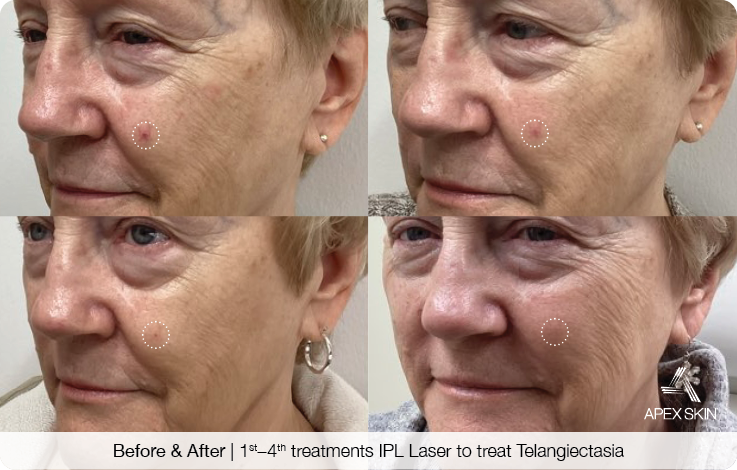
- Redness: Rosacea, telangiectasias (broken capillaries), and cherry angiomas
- Fine lines and wrinkles: Light resurfacing options plus deeper ablative treatments
- Volume loss: Collagen stimulation to plump cheeks, jawline, and lips
- Acne scarring: Including post-surgical scars
- Tattoo removal: Depending on ink colors
- Active acne: Can treat breakouts before big events
- Unwanted hair: Laser hair reduction for dark hairs


Who Should Consider Alma Harmony?
Almost anyone can benefit from Alma Harmony, but Mahoney sees two particularly ideal candidates:
- Cumulative sun damage patients (typically in their 40s-60s): Years and years of sun trauma over time that creates dark spots. Not just one weekend of getting a sunburn while you were down on the beach.
- Acne scarring patients: This laser is excellent for acne scarring as well as treating active acne. A lot of patients like to do it when a pimple pops up before a big event.
How Many Sessions Are Needed?
Expect three to five sessions on average, with most patients requiring about four treatments. Deeper concerns like acne scarring may take longer since treatments progress gradually to address the issue more effectively with each session.
What Does Recovery Look Like?
Recovery varies based on which Alma Harmony handpiece is used:
- For brown spot and redness treatments: Your face will look slightly sunburned immediately after treatment, and dark spots will appear darker. The sunburn sensation typically resolves the next day. Dark spots peak in darkness around days three to five, then develop a coffee-ground appearance before flaking off naturally. You can cover with makeup and resume normal activities (minus active skincare ingredients) right away.
- For acne scarring and wrinkle treatments: Expect some redness and a sunburn appearance for a few hours, but most patients look completely normal the next day. Minimal downtime required.
- For collagen stimulation treatments: No visible downtime at all. Just a nice plumping effect over time. Mahoney refers to these treatments as “lunchtime lasers.”
Tip: Schedule your first laser treatment when you don’t have major events planned so that you can gauge your personal recovery time. Future sessions can then be scheduled around your social calendar.
Combining Alma Harmony with Other Treatments
Because most patients have multiple skin concerns, Mahoney frequently combines different Alma Harmony handpieces in a single session. She also commonly pairs the laser with:
Real Results: A Patient’s Journey
One of Mahoney’s patients came in with a simple goal: to feel better about herself. Her specific concerns included dark spots on her face and neck, forehead wrinkles, and fine lines around her mouth.
We started with the Alma Harmony to address dark spots and create some collagen stimulation, helping with the wrinkles and fine lines. Then we added on a little bit of lip filler to help with lines around her mouth and ended with some botox to really achieve the patient’s goal.
The patient started out nervous and conservative but gained confidence as she saw results.
“Her overall confidence in the way she presents herself is a night and day difference after treatment.”
Lumenis Stellar M22: Targeted Treatments with Customizable Intensity
What Makes Lumenis Stellar M22 Different?
The Lumenis Stellar M22 is highly customizable and offers targeted treatments for specific skin concerns and goals.
One standout feature? Exceptional customization for pain tolerance, making it an excellent choice for patients concerned about discomfort.
What Does M22 Treat?
The M22 focuses on four primary concerns:
- Brown spots and sun damage
- Redness from rosacea and broken capillaries
- Acne scarring
- Fine lines and wrinkles
- Laser hair removal for pigmented hairs
The system includes both IPL (Intense Pulsed Light) and resurfacing handpieces, allowing providers to address multiple issues effectively.
Who Is the Ideal Candidate?
The ideal M22 candidate is similar to an Alma Harmony candidate: someone with brown spots, reds, fine lines, wrinkles, or acne scarring. The best results occur in patients with skin types one through four (light to medium skin tones).
How Many Sessions Are Needed?
Like the Alma Harmony, expect three to five sessions with an average of about four treatments to achieve optimal results.
What Does Recovery Look Like?
The M22 allows for customized downtime based on your schedule and preferences, however typically you can expect the following:
- For brown and red spot treatments: Spots darken initially, may look like coffee grounds for a few days, then gradually slough off. Some immediate redness resolves by the next day.
- For fine lines and wrinkles: Expect mild swelling and redness lasting 24 to 48 hours, with most patients seeing resolution by the next morning.
Real Results: Shrinking Enlarged Pores
One of Mahoney’s M22 patients struggled with enlarged pores across her nose and T-zone, leaving her feeling like she looked oily even though her skin wasn’t actually oily.
Using the ResurFX laser component of the M22 system and microneedling, Mahoney addressed the pore size concerns. The patient saw major improvements and was really pleased with the results after treatment.
Fraxel Laser: For Serious Concerns
What Makes Fraxel Different?
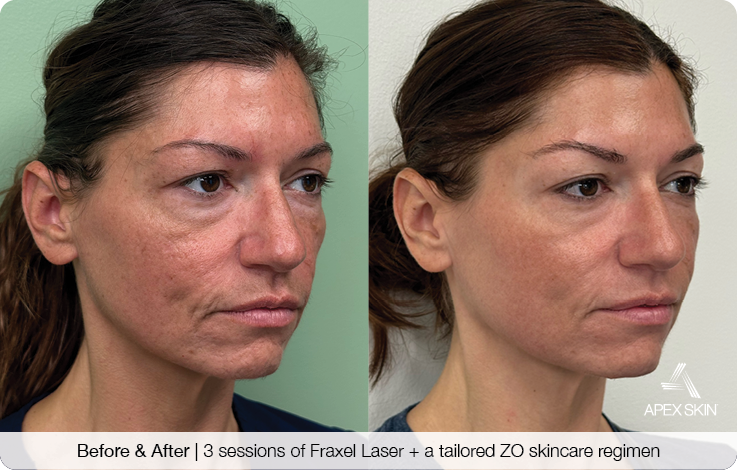
Fraxel is a step up in intensity as a non-ablative fractionalized laser that goes deeper than many other treatments. While more intense, Fraxel’s depth allows it to address more severe concerns that gentler lasers might not fully resolve.
What Does Fraxel Treat?
Fraxel focuses on three main areas:
- Pigmentation: Superficial and deeper brown spots
- Fine lines and wrinkles: More aggressive treatment than other lasers
- Scarring: Particularly effective for acne scars and post-surgical scars
Unlike Alma Harmony and M22, Fraxel does not address redness or vascular concerns.
Who Should Consider Fraxel?
Fraxel is a strong choice for patients with:
- Moderate to severe acne scarring
- Deep wrinkles who prefer not to use fillers
- Significant sun damage and hyperpigmentation
- Post-surgical scars
How Many Sessions Are Needed?
Because of its intensity, Fraxel may require fewer sessions than other lasers. Sometimes just one or two treatments achieve significant results. However, severe concerns might require up to six sessions.
What Does Recovery Look Like?
Fraxel requires the most substantial recovery of the lasers discussed here: seven to fourteen days, with most patients seeing improvement by day five.
Expect:
- Redness and swelling
- Superficial brown spots (like tiny dots across treated areas) if addressing hyperpigmentation
- Less visible changes if treating only wrinkles or scarring
Patients must avoid exercise for 24 to 48 hours to prevent sweat from irritating the treatment area.
If you’re looking for little to no downtime, Fraxel might not be the best choice.
“Some patients actually like downtime,” Mahoney noted. “They like to see that the laser is creating a little bit of trauma to the skin. They can see that what they’re investing in is making a difference.”
Combining Fraxel with Other Treatments
Fraxel can be combined with other laser treatments for enhanced results, though many patients choose to undergo Fraxel as a standalone intensive treatment.
Real Results: Deep Wrinkles and Body Scarring
One patient had significant lines around her mouth but didn’t want filler so we focused the treatment only around her mouth and with a few maintenance sessions, the patient has seen great results.
Another patient had acne scarring on his body treated with Fraxel. and has done extremely well with the pain tolerance. They are seeing much improvement in the scarring.
VBeam Laser: The Gold Standard for Redness
What Makes VBeam Different?
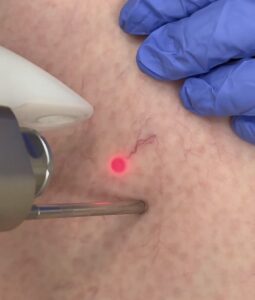
VBeam is a pulsed dye laser (PDL) that specifically targets vascular issues that cause visible blood vessels and redness in the skin. According to Dr. Brian Moore, MD, FAAD, “It works by delivering a concentrated beam of light at a 595 nm wavelength, which is absorbed by hemoglobin in red blood cells. This creates heat within the vessel, causing the vessel walls to collapse and be naturally reabsorbed by the body without damaging the surrounding normal skin.”
What sets VBeam apart from other lasers is its precision and safety profile. Unlike resurfacing lasers that remove layers of skin, VBeam leaves the skin surface completely intact. It also features a built-in cooling mist that sprays the skin just before each laser pulse, making it one of the most comfortable vascular laser treatments available.
Who Should Consider VBeam?
The ideal candidate has fair-to-medium skin tone and struggles with persistent redness. While VBeam has earned its reputation treating rosacea and facial flushing, Dr. Moore notes it’s also “considered the gold standard for treating telangiectasias (broken capillaries), port wine stains, and angiomas (small red bumps).”
Common reasons patients seek VBeam treatment:
- Feeling perpetually flushed
- Relying on heavy makeup to conceal redness
- Red acne marks that won’t fade
- Surgical scars or keloids that appear red
- Spider veins around the nose or cheeks
How Patients See Improvement
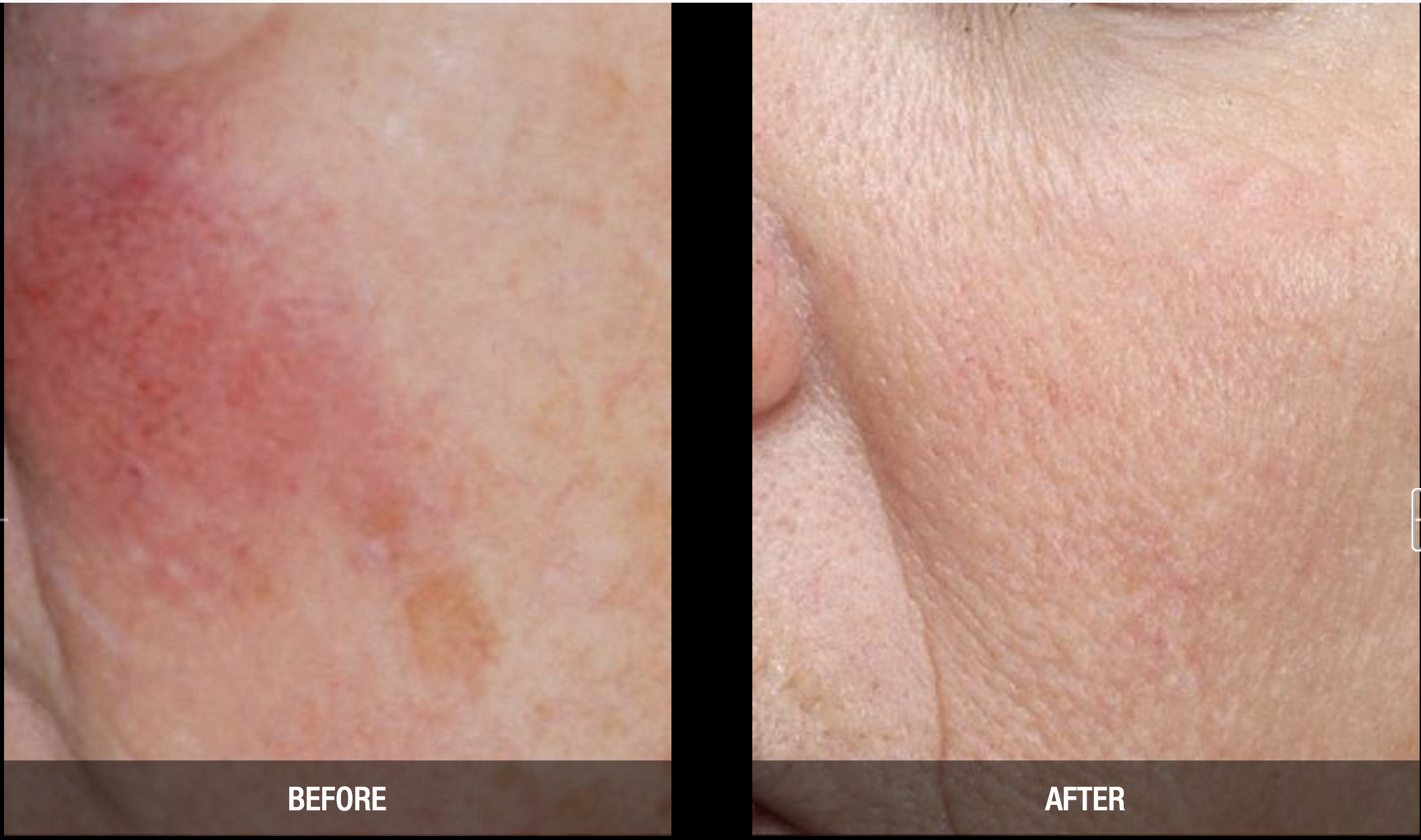
The most noticeable improvement is a calmer, more even skin tone. Patients often see spider veins around the nose or cheeks disappear, and the overall baseline redness of the face decreases significantly. The skin appears less reactive and more uniform in color.
Unlike treatments that provide temporary relief, VBeam addresses the root cause of vascular redness by actually eliminating the dilated blood vessels creating the discoloration.
How Many Sessions Are Needed?
Treatment plans vary based on the specific concern:
- For rosacea or diffuse redness: Two to four treatments spaced about one month apart
- For single broken capillaries or small angiomas: One to two sessions may suffice
What Does Recovery Look Like?
Recovery is mild to moderate. Most patients experience redness, bruising, and sometimes mild swelling that can last one to two weeks, depending on treatment intensity and individual skin response. The purpura (temporary bruising) from VBeam is actually a sign the treatment is working and indicates the blood vessels have collapsed as intended.
Combining VBeam with Other Treatments
VBeam often serves as the foundation of a comprehensive treatment plan. Dr. Moore commonly pairs it with:
- IPL (Intense Pulsed Light): VBeam treats red vessels while IPL targets brown sunspots and discoloration, addressing both redness and pigmentation concerns simultaneously.
- Microneedling or fractionated lasers: VBeam improves skin color and redness while additional treatments address texture, fine lines, pore size, and overall skin quality.
- Chemical peels: Light peels can improve texture after VBeam has addressed the vascular component.
Real Results: Breaking the Skincare Product Cycle
Dr. Moore shares the story of a patient who spent nearly five years and hundreds of dollars trying to correct facial redness with skincare products. She had type 1 rosacea but believed she simply had sensitive skin or adult acne.
The breakthrough came when Dr. Moore explained that her redness was caused by dilated blood vessels located deep in the dermis well beyond the reach of any topical skincare product. Her treatment plan included three VBeam sessions followed by a light chemical peel to improve texture.
The results were transformative. After her second treatment, the patient was able to stop wearing heavy foundation for the first time in years. By the end of her third session, the visible veins around her nose had disappeared and her chronic flushing had significantly improved.
“She realized that while she had been spending money on temporary topical solutions, the laser treatment addressed the root cause of her redness,” Dr. Moore noted. It’s a common revelation for rosacea patients who’ve been cycling through products without understanding that their condition requires vascular treatment, not just topical care.
How to Choose the Right Laser for You
With four powerful laser systems available at Apex Skin, how do providers decide which to recommend?
“It’s really what the patient shares during the consultation,” Mahoney explained. “Every single treatment that I decide on for a patient is based on the person that’s in that chair right at that moment and what I think is going to be best for them.”
Key factors include:
- Your timeline: If you need faster results, certain lasers work better than others. If you’re willing to go through a full series and trust the process, that opens up different options.
- Your downtime tolerance: Some patients can’t take time away from work or social obligations. Others prefer intensive treatments with visible recovery.
- Your specific concerns: While there’s overlap in what these lasers treat, some excel at particular issues.
- Your pain tolerance: Each laser offers different intensity levels and pain management options.
“One of these lasers is not necessarily better than the other one in any regards,” Mahoney emphasized. “It just depends on what their goals are, what their downtime can be, and what their timeline for treatment is.”
Where to Start: Your Complimentary Consultation
If you’re intrigued by any of these laser treatments, Mahoney recommends starting with a complimentary consultation with an Apex Skin provider.
During your consultation, you’ll discuss:
- Your specific goals and concerns
- Your timeline for treatment
- Your tolerance for downtime and discomfort
- The right skincare regimen to prepare your skin
“Getting you on the proper skincare first, getting your skin ready for the laser, making sure that it’s going to boost that collagen, it’s going to address those dark spots—we need some key ingredients in the skin first to make sure that it’s gonna work effectively and have long-term results,” Mahoney explained.
From there, you and your provider will develop a customized treatment plan that aligns with your goals, lifestyle, and budget.
The Bottom Line on Laser Skin Rejuvenation
Modern laser treatments offer remarkable versatility and results. Whether you’re dealing with sun damage from decades past, stubborn acne scars, fine lines that makeup can’t hide, or simply want to maintain your skin’s health and appearance, there’s likely a laser treatment that can help.
The key is finding the right provider who takes time to understand your unique skin, concerns, and lifestyle then customizes treatments accordingly. Cookie-cutter approaches don’t work when it comes to laser skin rejuvenation.
Ready to explore which laser treatment is right for your skin? Contact Apex Skin to schedule your complimentary consultation with Eva Mahoney, PA-C, or another experienced provider. Your journey to clearer, smoother, more radiant skin starts with a conversation.

Eva Mahoney is an Aesthetic Physician Associate licensed in the state of Ohio and certified by the National Commission on Certification of Physician Assistants. She received her Bachelor of Science in Applied Health Sciences in 2021 at Bowling Green State University and a Master of Physician Associate Studies in 2023 from Nova Southeastern University in Fort Lauderdale, Florida.