
There’s something about that first real stretch of warm, sunny days in Northeast Ohio that just feels different. After months of grey skies and cold mornings, the sunshine hits and suddenly everyone is outside walking, gardening, heading to the lake, planning weekend trips. And if you’ve managed to escape south for a few days somewhere warmer, you know that feeling multiplies the moment you step off the plane into actual sunlight and warmth.
It’s completely natural to want to soak it all in. But it’s also one of the most common times that your sun protection routine slips.
The good news is that protecting your skin from the sun doesn’t have to be complicated, expensive, or time-consuming. A few simple, consistent habits make a real difference, and once they become part of your routine, you barely think about them.
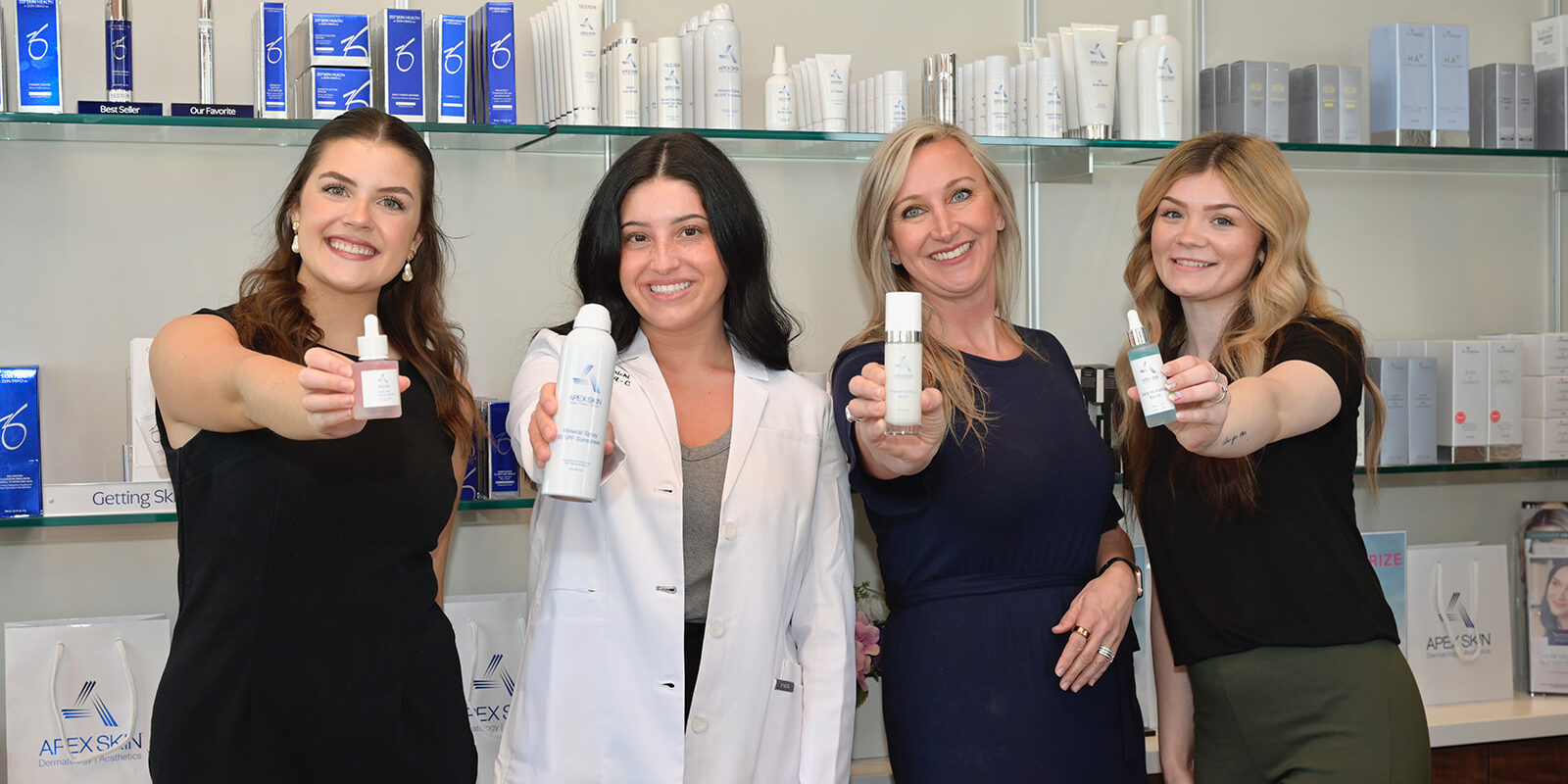
Here, the providers at Apex Skin, named Top Dermatology Practice Middle America by Aesthetic Everything®, break down everything you need to know.
How UV Rays Affect Your Skin
Not all sunlight is the same. The UV rays that reach your skin fall into two main categories, and understanding both helps explain why a layered approach to sun protection works better than any single product.
- UVB rays are the ones most people are familiar with. They’re responsible for sunburn. They affect the outer layers of your skin and are most intense during peak sun hours. Most sunscreens are formulated primarily to address UVB exposure.
- UVA rays have a bit more stealth. They penetrate deeper into the skin and are present at consistent levels throughout the day, every day, including in winter and through cloud cover. UVA rays are the primary driver of premature aging: fine lines, dark spots, and uneven skin texture over time.
What Sunburn and Sun Damage Actually Look Like
A sunburn is your skin’s inflammatory response to UV overexposure. The redness, heat, and peeling are signs that your skin is actively repairing itself after UV radiation has damaged skin cells.
A tan is also a response to UV exposure, even if it looks different than a burn. When UV rays reach the skin, the body produces more melanin as a protective mechanism. That golden color is actually your skin’s way of trying to shield itself.
Most sun damage builds quietly over years of everyday exposure: during your commute, while you sit near a window, when you spend time outside without thinking. Over time, this cumulative UV exposure can lead to premature aging: fine lines, uneven skin tone, rough texture, and dark spots. These are the changes that bring many patients into a dermatology practice, and they’re largely preventable with consistent sun protection habits.
It’s never too late to start using sun protection, and the skin has a remarkable ability to benefit from protection even after years of sun exposure.
Why Sun Protection Is an Act of Care for Your Skin
Protecting your skin is one of the simplest, most impactful things you can do for your long-term health and appearance.
There are three clear reasons to make sun protection a daily habit:
- It reduces the risk of skin cell changes over time. Skin cancer is the most common cancer in the United States, and the majority of cases are linked to UV exposure. Caught early, it is highly treatable. Annual skin exams with your dermatologist are the professional complement to your daily sun protection habits.
- It preserves your skin’s appearance. UV exposure is the leading cause of premature aging. Far more so than genetics alone. Consistent sun protection is one of the most effective anti-aging strategies available, and it costs far less than corrective treatments down the road.
- It supports an even, healthy complexion. UV exposure worsens hyperpigmentation, melasma, and uneven skin tone. For patients already working to address these concerns with treatments or products, daily sun protection is what protects that investment.
One important note: sun protection matters for every skin tone. A common misconception is that people with deeper skin tones don’t need SPF. While melanin does offer some natural protection, it does not fully prevent UV damage, and skin cancer can and does occur across all skin tones and is often diagnosed later because of this myth.
Sunscreen: The Foundation of Your Sun Protection Routine
Sunscreen is the most researched, most accessible, and most widely recommended form of sun protection. Here’s what you need to know to use it effectively.
Mineral vs. Chemical Sunscreen: Which Is Right for You?
Sunscreens fall into two main categories based on how their active ingredients work.
- Mineral sunscreens (containing zinc oxide or titanium dioxide) sit on top of the skin and physically reflect UV rays away. They tend to be well-tolerated, making them a strong choice for sensitive skin, rosacea-prone skin, children, and anyone who has experienced irritation with other formulas. Mineral sunscreens have seen a significant surge in consumer interest in recent years. They’re effective, gentle, and increasingly available in lightweight, non-whitening formulas.
- Chemical sunscreens absorb UV rays and convert them to heat before they can penetrate the skin. They tend to feel lighter and go on more invisibly, which makes them appealing for everyday use under makeup. Both types are effective when used correctly.
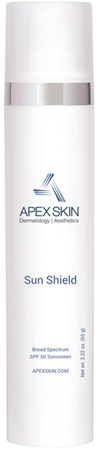
Looking for a high quality sunscreen? Check out the Apex Skin sunscreen options.
What SPF Level Do You Actually Need?
SPF 30 blocks approximately 97% of UVB rays. SPF 50 blocks approximately 98%.
For daily use like going to work, running errands, or driving, SPF 30 broad spectrum sunscreen is the standard recommendation. If you’re spending extended time outdoors, bumping up to SPF 50 is a smart choice. Always choose a broad spectrum sunscreen, which means the formula protects against both UVA and UVB rays.
Apply sunscreen about 15 minutes before going outside. Use roughly a teaspoon for your face and neck, and a shot glass worth for your body if you’re in a swimsuit or shorts.
If you’re looking for a deeper dive on choosing the right sunscreen, Physician Assistant Lauren Redd breaks down exactly what to look for, from ingredients to SPF numbers, in her complete sunscreen guide.
Why Sunscreen Reapplication Matters More Than You Think
Sunscreen wears off through sweat, water, and simply breaking down over time. Reapplying every two hours during outdoor activity is the standard guidance, and immediately after swimming or towel-drying regardless of timing.
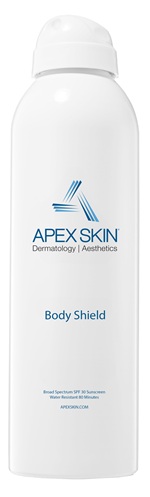
This is where a lot of sun protection routines fall short. The fix doesn’t have to be complicated: keep a small SPF stick or spray in your bag, car, or desk. Formulas designed for reapplication over makeup make it much easier to stay protected throughout the day.
UPF Clothing: Sun Protection You Don’t Have to Think About
Sunscreen gets most of the attention, but clothing is actually your most consistent, reliable form of sun protection because it doesn’t wear off and doesn’t require reapplication.
SPF vs. UPF: Understanding the Difference
SPF measures the protection sunscreen provides on skin. UPF (Ultraviolet Protection Factor) measures how much UV radiation a fabric blocks before it reaches your skin. A UPF 50 garment blocks 98% of UV rays.
Here’s the part that often surprises people: a standard white cotton t-shirt has a UPF of roughly 5 to 8. That’s barely any protection at all, especially if the fabric gets wet, which can drop its UPF even further. Most everyday summer clothing offers far less sun protection than people assume.
Purpose-made UPF clothing is a genuine upgrade, and it’s gotten significantly more stylish and comfortable in recent years.
What to Look for in Sun Protective Clothing
Look for a UPF rating of 30 or above (good) or 50+ (excellent). Beyond the rating, the material and construction matter: tightly woven fabrics block more UV than loose weaves, dark or bright colors outperform light ones, and dry fabric performs better than wet.
The Skin Cancer Foundation’s Seal of Recommendation is a trustworthy label to look for when shopping for sun protective apparel. UPF clothing is especially worth considering for people who spend a lot of time outdoors for work, exercise, or recreation.
Choosing the Right Hat for Sun Protection
A good hat is one of the simplest, most effective additions to any sun protection routine, but the type of hat matters more than most people realize.
Baseball caps are the most common choice, but they leave the ears and the back of the neck almost completely exposed. These are among the most common areas for sun damage to accumulate over time, and also among the most commonly overlooked during self-checks.
What dermatologists actually recommend: a wide-brim hat with a brim of at least three inches, which shades the face, ears, neck, and upper back. Legionnaire-style hats with additional neck coverage are an excellent option for extended outdoor time.
Sunglasses and UV Protection: Don’t Skip This Step
Sun protection doesn’t stop at your skin. UV exposure to the eyes contributes to cataracts, macular degeneration, and changes in the delicate skin around the eyes—an area that’s also one of the first places to show the signs of photoaging.
The most important thing to know: dark lenses are not the same as UV protection. A dark lens without UV filtering can actually be worse than no sunglasses at all, because your pupil dilates to compensate for the reduced light, allowing more UV in.
Always look for UV400 or 100% UV protection on the label.
Shade and Timing: Simple Sun Protection Habits That Cost Nothing
Two of the most effective sun protection strategies don’t require buying anything.
- Check your UV index daily. Make it as routine as checking the temperature. When the UV index is 3 or above (which in Northeast Ohio applies to most days from April through September, and even some winter days) the sun is strong enough to cause cumulative damage. Most weather apps display the UV index alongside temperature and precipitation.
- Be mindful of peak sun hours. UV intensity is highest between 10 a.m. and 4 p.m. This doesn’t mean staying inside. It means being more intentional about coverage and reapplication during that window, and seeking shade when you can.
Shade does meaningfully reduce UV exposure, but it doesn’t eliminate it. Reflected UV from water, concrete, sand, and other surfaces can still reach your skin even when you’re out of direct sunlight. Think of shade as one layer of a complete sun protection strategy, not a standalone solution.
After Sun Exposure: How to Care for Your Skin
Sun exposure, even without a burn, draws moisture out of the skin. Rehydrating after time outside is a simple habit worth building. A fragrance-free moisturizer or a product with aloe vera can help soothe and restore the skin barrier after a day outdoors.
If you do get sunburned, keep the skin cool and moisturized, stay hydrated, and avoid further sun exposure while it heals. A sunburn that blisters, causes fever, or covers a large area of the body is worth contacting your provider about.
And if you notice any changes in moles, new spots, or areas of skin that don’t seem to be healing the way they should, those are always worth a conversation with your dermatologist.
Enjoy the Sun. Protect Your Skin. Repeat.
Summers in Northeast Ohio are short and worth savoring. Sun protection isn’t about limiting how much time you spend outside. It’s about making sure you can keep doing exactly that, year after year.
Your daily sun protection routine and your annual skin exam work together. One protects you every day and the other catches what daily habits can’t. Apex Skin was recently named Top Dermatology Practice Middle America by Aesthetic Everything® and whether you have questions about your skin or you’re ready to schedule your annual skin check, the team at Apex Skin is here to help.


