
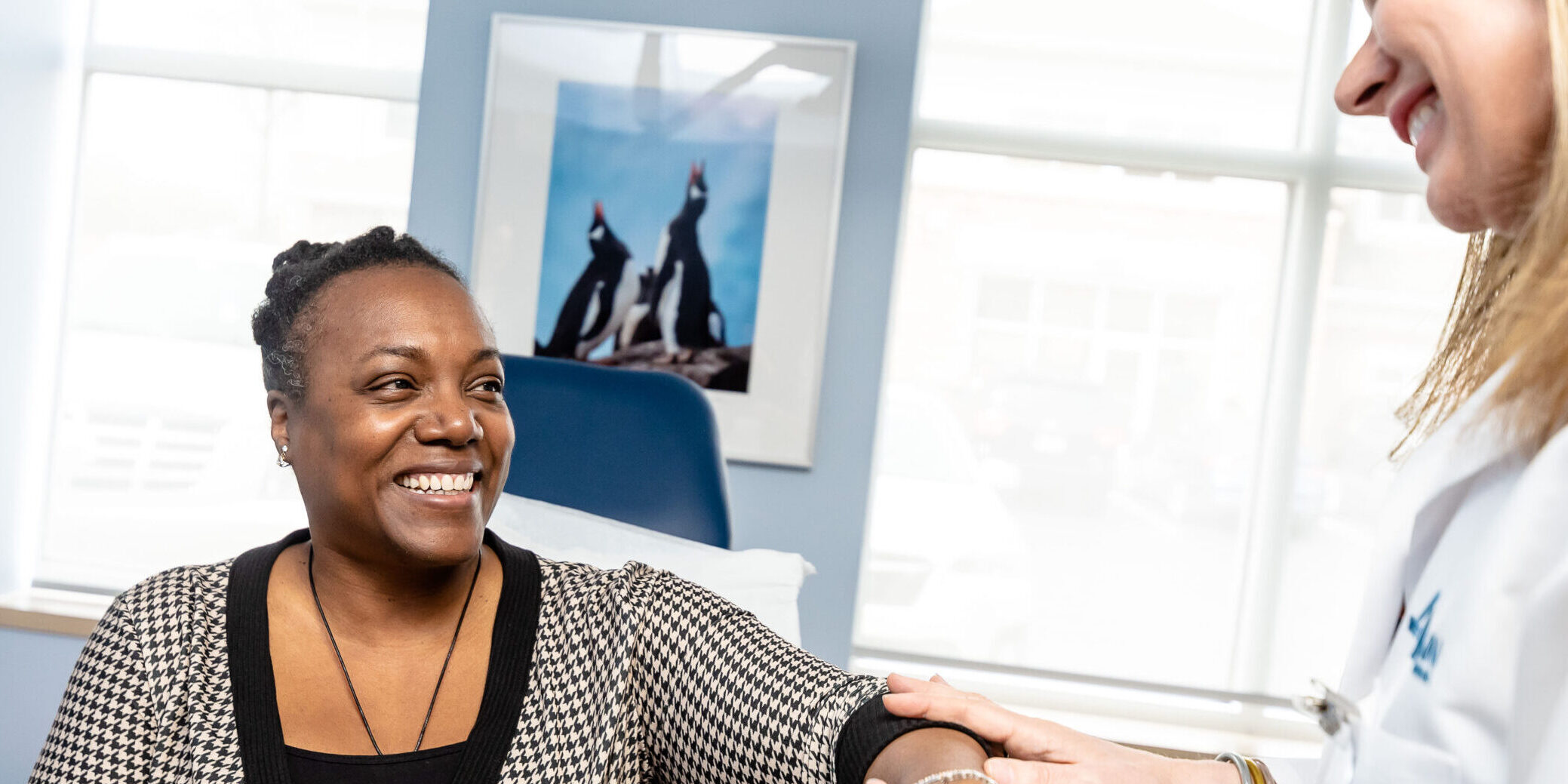
Most of us can’t see our own backs, the backs of our legs, or even our scalps very well, all places where our bodies can show signs of melanoma, basal cell carcinoma, and squamous cell carcinoma. That’s why a full body skin exam (commonly called a skin cancer screening) could be one of the most important appointments on your calendar this year.

Dr. Cynthia Lavery Henry of Apex Skin Avon emphasizes the importance of these yearly dermatology visits, having discovered early-stage melanomas in unexpected places during routine screenings.
“I’ve had a number of patients who’ve come in for full body skin checks because their family doctor or primary care doctor may have recommended it and I have found melanoma sometimes on the back or the back of the legs,” Dr. Henry explained. “You can’t see those areas of the body and skin exams have allowed us to catch cancer at early stages.”
Why Annual Skin Checks are Essential for Your Health
There are two simple skin rules to follow when you’re focused on your health: wear sunscreen daily and get a yearly skin exam. This simple advice goes hand-in-hand and forms the foundation of preventive skin care, yet many of us overlook the importance of professional skin cancer screening until something concerning appears.
The reality is that skin cancer is highly treatable when caught early. According to the American Academy of Dermatology, the five-year survival rate for melanoma detected in its earliest stage is approximately 99%. However, that rate drops significantly when melanoma is diagnosed at later stages, underscoring the critical importance of regular full body skin exams.
What is a Full Body Skin Exam?
A full body skin exam (or skin cancer screening) is a systematic, head-to-toe evaluation of your skin performed by a dermatologist. During this exam, your provider examines every area of your body including spaces between toes, scalp, behind ears, and other areas you likely can’t examine yourself.
Who Should Get a Yearly Dermatology Visit?
Annual skin checks are recommended for everyone, but certain individuals may need more frequent monitoring.
High-risk patients who need additional visits include:
- Anyone with a personal history of skin cancer
- Patients with a family history of melanoma or other skin cancers
- Those with numerous moles or atypical moles
And age doesn’t matter. Even young adults should establish a routine seeing a dermatologist annually.
“I have a lot of college students that come in for their skin checks annually,” Dr. Henry shared. “They have family members who have had skin cancer. They’ve had friends that have skin cancer. So I don’t think it’s really ever too early to come in.”
For those with family history, she advises starting annual exams when a pediatrician or family doctor recommends.
What to Expect During Your Full Body Skin Exam
Many of us avoid scheduling an annual skin check because we are unsure what the process involves or feel anxious about the examination. Understanding what happens during your dermatology appointment can ease those concerns.
The Full Body Skin Exam Process Explained
During the full body skin exam, you’ll undress to your comfort level (typically to underwear and bra) and wear a gown. Your dermatologist will move the gown as needed to systematically examine different areas of your body.
Dr. Henry notes that the process is “not as invasive as you might think.”
As your provider checks each area, they’ll point out any spots of concern and explain what they’re looking for. If any testing is needed, a biopsy can be performed during the same appointment. The skin sample is sent to a lab for analysis, with results typically available within two weeks. The office will call with your results regardless of whether the growth is benign or requires further attention.

The ABCDE Rule: What Dermatologists Look For During Skin Cancer Screening
Dermatologists use the ABCDE Rule when evaluating moles and skin lesions during a skin cancer screening or annual skin exam.

Here’s exactly what they are looking for:
- Asymmetry in Moles: When one half of a mole is unlike the other half.
- Border Irregularities: Moles should have smooth borders. Concerns arise with moles that are notched or irregular in texture around the border.
- Color Variations: Moles should not have color variation. If there is more than one color in a mole, whether it be red, white blue or even varying shades of brown, it will be examined further.
- Diameter Concerns: Moles should be no larger than 6 millimeters or the size of a pencil eraser.
- Evolving or New Spots: Moles that have shifted over time or are newly developed should be evaluated.
The American Academy of Dermatology provides comprehensive resources on the ABCDE criteria, which can help you conduct self-examinations between your annual dermatology visits.
Types of Skin Cancer Detected During a Full Body Skin Exam
During your full body skin exam, your dermatologist evaluates for three main types of cancer:
Here’s exactly what they are looking for:
- Melanoma is the most serious form of skin cancer due to its potential to spread to other parts of the body.
- Basal cell carcinoma is the most common type of skin cancer, typically appearing in sun-exposed areas. While it rarely spreads, early treatment prevents local tissue damage.
- Squamous cell carcinoma is the second most common skin cancer and can spread if left untreated, making early detection through regular skin cancer screening essential.
According to the Skin Cancer Foundation, when detected early, the five-year survival rate for melanoma approaches 99%.
Skin Cancer Treatment Options: Mohs Micrographic Surgery
If basal cell carcinoma or squamous cell carcinoma is confirmed during your annual skin check, you may be a candidate for Mohs micrographic surgery, which is the most effective treatment for certain types of skin cancer.
Mohs surgery is a specialized, precise technique that removes skin cancer layer by layer while preserving as much healthy tissue as possible and offers the highest cure rate (up to 99% for certain skin cancers) while minimizing scarring.

At Apex Skin, our fellowship-trained Mohs surgeons perform this advanced procedure in-office, examining each layer of tissue under a microscope during the surgery to ensure complete cancer removal. Most patients complete their Mohs procedure and reconstruction in a single visit.
Between Appointments: Monthly Self-Skin Examinations
Your annual skin check is crucial, but Dr. Henry also recommends monthly self-examinations. “Just like breast exams, we recommend patients conduct self spot checks every month.” She suggests performing these checks after showering, using a full-length mirror to examine as much of your body as possible.
“Although it’s impossible to really check your back well,” she acknowledged, which is another reason why professional full body skin exams are irreplaceable.
“If you’re in doubt please come in,” Dr. Henry urged. “I’d rather look at something of concern and either give you reassurance or do the necessary testing.”
Don’t wait until your next scheduled dermatologist appointment if you notice something new or changing. Early intervention is key.
Prevention: Your Best Defense Against Skin Cancer
“Sun protection is something that I harp on a lot,” Dr. Henry admitted, and for good reason. While your annual skin check detects problems early, prevention stops them from developing in the first place.
Daily SPF Protection
Wearing SPF 30 or higher on a daily basis on the face year round and on any exposed skin during the summer months is a critical piece in preventing skin cancer.
“It doesn’t matter how much cloud cover there is,” Dr. Henry shared. “There is still damage that can be done by the sun.”
She also recommends daily sunscreen application on often-forgotten areas like the back of the hands. “People do a lot of driving and they don’t realize how much their hands are up in the sun when the sun comes through car windows.”

Sun-Protective Clothing and Accessories
Beyond sunscreen, Dr. Henry advocates for physical barriers like wide brimmed hats and sun protective clothing like long sleeve rash guard shirts and sun shirts for when you’re outdoors.
When spending extended time outside, remember to reapply SPF 30 or higher every two hours, as recommended by the American Academy of Dermatology’s sun safety guidelines.
Why Prevention Matters
“The more sun exposure that you have, the higher risk of skin cancer you have, even decades after the exposure.” Dr. Henry explained.
The cumulative nature of sun damage means it’s never too early (or too late) to start protecting your skin.
Schedule Your Annual Skin Check at Apex Skin
Don’t wait until you notice something concerning. Following Dr. Henry’s advice, make your annual skin check a regular part of your preventive skin care routine just like your yearly physical or dental cleaning.
Ready to schedule your full body skin exam? Contact any of our Apex Skin locations to book your dermatologist appointment today. Early detection makes all the difference in successful treatment outcomes.

Dr. Henry, DO, FAOCD, FAAD
Dr. Cynthia Lavery Henry is a board-certified dermatologist practicing at the Apex Skin Avon office. Dr. Henry grew up in Medina, OH. From an early age, she was influenced by her grandmother, an anesthesiologist who was one of only 4 women in medical school at her time. Dr. Henry observed how important and exciting her grandmother’s interaction with patients was, and the meaningful impact she had on their lives and knew that she would like to impact her community similarly.


